




Submersible or Surface Pump? The One Most People Choose Is Wrong
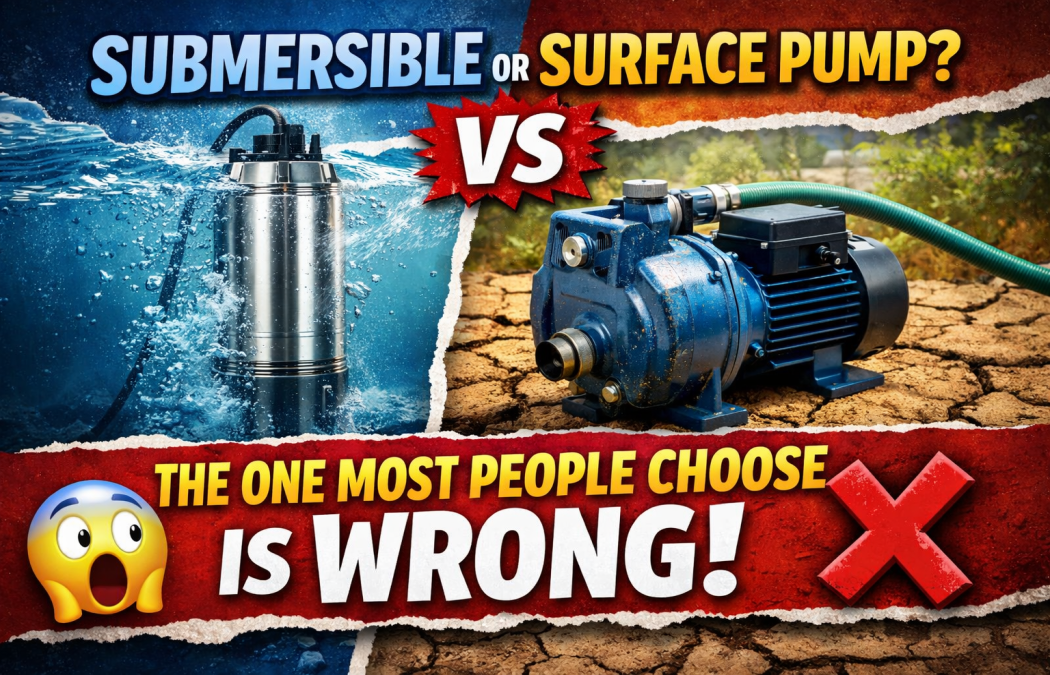
Choosing the right water pump for your home or business in Africa can be confusing. Should you go for a submersible pump or a surface pump? Each type has its strengths and best uses.
In this guide, we break down how these pumps work, where they perform best, and how to choose the right one for your situation — in a way that’s practical, clear, and rooted in everyday needs.
What’s the Difference?
Submersible Pump — Underwater Power
A submersible pump sits inside the water — in a borehole, well, or sump. It pushes water up from below.
Benefits
- Quiet operation (no motor noise above ground)
- Less risk of priming issues
- Great for deep water sources
- Efficient at moving water upward
Common Uses
+ Boreholes and wells
+ Deep underground tanks
+ Homes and farms with deep water sources
Surface Pump — Outside the Water
A surface pump stays above ground. It pulls water from a source — like a borehole, shallow well, or storage tank — and pushes it where you need it.
Benefits
+ Easy to install and maintain
+ Accessible for repairs
+ Lower upfront cost
+ Great for shallow water sources
Common Uses
+ Tanks and reservoirs
+ Shallow wells (less than 7–9 meters)
+ Garden irrigation and pressure boosting
How They Work — Quick and Simple
Submersible Pump
The motor and pump are sealed together. Because the pump is underwater, it pushes water up smoothly without losing prime.
Why That Matters
No priming means less fuss and better reliability, especially where power isn’t stable.
Surface Pump
The pump stays dry and uses suction to lift water before sending it onward.
Why That Matters
Easy access for repair and maintenance — but requires priming before use.
Choosing Based on Your Water Source
Water Depth
Deep (> 9 meters) → Submersible pump
Shallow (< 9 meters) → Surface pump
Surface pumps struggle to lift water from deep underground, while submersibles excel in deep wells.
Choosing Based on Your Needs
1. Home Water Supply
Deep borehole: Submersible keeps water flowing reliably.
Tank or overhead reservoir: Surface pump works well to fill and boost pressure.
2. Farm & Irrigation
Wells and boreholes: Submersible pumps handle deep water with less fuss.
Open canals or tanks: Surface pumps make maintenance easier.
Power and Efficiency
Submersible Pumps
+ Use less energy for lifting water from deep.
+ Quieter, more stable operation underground.
Surface Pumps
+ Use more energy to suck up water but easier to control.
+ Great where water is shallow and accessible.
Installation and Maintenance
Submersible Pump
Installation
+ Lowered into well or borehole
+ Electrical connections waterproofed
Maintenance
Harder to reach, but less frequent repair
Surface Pump
Installation
+ Set up above ground
+ Easy to hook up to pipes and power
Maintenance
Simple repairs, easy access
Requires priming
Cost Comparison
Upfront Cost
Surface pumps are usually cheaper to buy
Submersibles cost more because of waterproofing and deeper installation
Running Cost
Submersible pumps often use less energy
Surface pumps can cost more to run if lifting water from depth
Which One Should You Choose?
Choose a Submersible If:
+ You have a deep water source
+ You want quiet, reliable performance
+ You prefer low maintenance once installed
Choose a Surface Pump If:
+ Water is shallow
+ You want easy access for repairs
+ You need a lower upfront cost
Safety and Practical Tips
For Submersible Pumps
- Ensure electrical wiring is waterproofed
- Use a qualified installer
- Protect against lightning and power surges
For Surface Pumps
- Check for leaks and priming needs
- Keep the pump clean and shaded
- Monitor suction pipe for airlocks
Final Thought
The right pump depends on your water source, budget, and how you use water every day.
Deep underground? Go submersible.
Shallow and accessible? A surface pump fits well.
Both can serve homes, farms, and businesses — but choosing the one that matches your needs keeps costs low and performance high.