




How to Choose the Right Sewage Pump for Your Home, Estate or Business
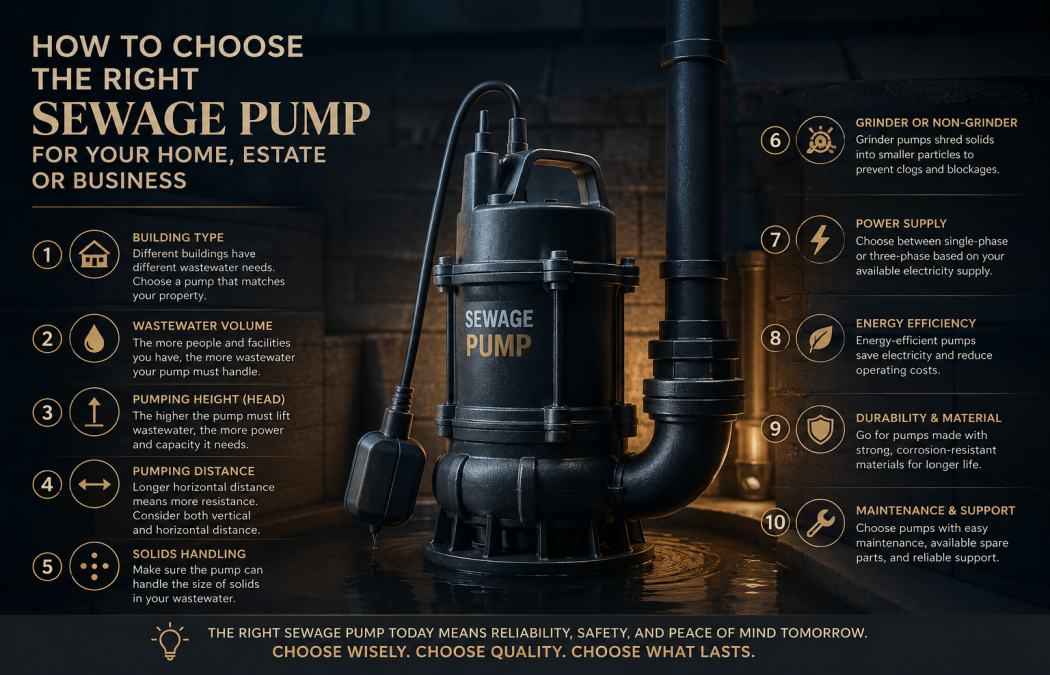
Imagine this.
It's 11:30 p.m. on a rainy Friday night. Your family is asleep when you notice an unpleasant smell coming from the bathroom. Within minutes, wastewater begins backing up through the floor drain. Before long, your compound is flooded with sewage, and panic sets in.
The cause?
Not necessarily a bad sewage pump—but often the wrong sewage pump.
This scenario happens more often than many property owners realize. Whether you're building a new home, managing a hotel, running a factory, or overseeing an estate, choosing the wrong sewage pump can lead to constant breakdowns, high electricity bills, expensive repairs, and serious health risks.
The good news is that choosing the right sewage pump doesn't have to be complicated.
In this guide, we'll walk you through everything you need to know in simple language. By the end, you'll know exactly what to look for before spending your hard-earned money.
What Exactly Does a Sewage Pump Do?
Before choosing a sewage pump, it's important to understand its job.
A sewage pump moves wastewater containing solid waste from a lower level to a higher discharge point, such as a septic tank, sewer line, or wastewater treatment system.
Unlike clean water pumps, sewage pumps are designed to handle:
* Toilet waste
* Bathroom wastewater
* Kitchen wastewater
* Laundry wastewater
* Organic solids
* Greywater and blackwater
Think of it as the hardworking employee behind the scenes that keeps your property clean, hygienic, and functional. You rarely notice it when it's working—but you'll certainly notice when it isn't.
Why Choosing the Right Pump Matters
Many people make the mistake of buying a pump simply because it's cheap or because someone recommended it.
Unfortunately, sewage pumps are not one-size-fits-all.
A pump that's perfect for a three-bedroom bungalow may be completely inadequate for a hotel with 60 rooms. Likewise, an industrial pump could be unnecessarily expensive and inefficient for a small residential property.
Choosing the right pump helps you:
* Reduce maintenance costs
* Save on electricity
* Prevent sewage overflow
* Increase pump lifespan
* Improve system reliability
* Avoid unexpected emergencies
In short, the right choice today can save you years of frustration.
1. Understand Your Building Type
The first question to ask yourself is:
"Where will this pump be used?"
Different buildings produce different amounts of wastewater.
For example:
Residential Homes
Most homes require compact sewage pumps that can comfortably handle daily household wastewater.
Ideal for:
* Bungalows
* Duplexes
* Blocks of flats
Estates
Housing estates often require larger pumps capable of handling wastewater from multiple homes simultaneously.
Some estates even install multiple pumps working together for backup and increased reliability.
Hotels
Hotels generate significant wastewater from:
* Guest rooms
* Restaurants
* Laundry facilities
* Swimming pools
* Kitchens
These applications demand heavy-duty pumps built for continuous operation.
Factories
Industrial facilities often produce wastewater containing chemicals, oils, or abrasive particles.
These environments require specially selected pumps designed for industrial conditions.
2. Know How Much Wastewater You Generate
One of the biggest mistakes buyers make is underestimating wastewater volume.
Ask yourself:
* How many people use the building daily?
* How many toilets are installed?
* Are there commercial kitchens?
* Is there a laundry facility?
* Will future expansion increase wastewater?
A larger building naturally requires a pump capable of moving greater volumes of wastewater.
3. Calculate the Pumping Height (Head)
This is one of the most overlooked factors.
Head refers to the vertical distance the pump must lift wastewater.
Imagine carrying a bucket of water upstairs.
The higher you climb, the more effort it takes.
The same principle applies to sewage pumps.
If your septic tank or sewer connection is much higher than the pump location, you'll need a pump with sufficient lifting capacity.
Choosing a pump with inadequate head can lead to poor performance or complete system failure.
4. Consider the Distance the Wastewater Must Travel
It's not just about lifting wastewater upward.
Sometimes the wastewater must travel long horizontal distances before reaching its destination.
Longer pipe runs create additional resistance.
Your installer should consider both:
* Vertical lift
* Horizontal distance
This ensures the selected pump performs efficiently under real operating conditions.
5. Check the Size of Solids the Pump Can Handle
Not every sewage pump handles solids equally.
Some pumps are designed for smaller particles, while others can pass much larger solids without clogging.
If your building serves many occupants or commercial operations, selecting a pump with an adequate solids-handling capacity can significantly reduce maintenance issues.
6. Decide Whether You Need a Grinder Pump
In some situations, a standard sewage pump isn't enough.
Grinder pumps contain sharp cutting mechanisms that shred solid waste into tiny particles before pumping.
They are particularly useful when:
* Wastewater must travel long distances
* Smaller discharge pipes are used
* Blockages are common
* The installation site has challenging conditions
Although grinder pumps generally cost more, they can reduce clogging and improve long-term reliability.
7. Choose the Right Power Supply
Before buying a sewage pump, confirm your available electricity supply.
Most sewage pumps are available in:
Single-Phase Pumps
Suitable for:
* Homes
* Small offices
* Small commercial buildings
Three-Phase Pumps
Suitable for:
* Hotels
* Factories
* Shopping malls
* Large estates
* Industrial facilities
Using the correct power supply improves efficiency and helps protect the motor.
8. Consider Energy Efficiency
A sewage pump may operate several times every day.
An inefficient pump can quietly increase your electricity bill month after month.
When comparing options, ask about:
* Motor efficiency
* Operating costs
* Duty cycle
* Expected energy consumption
Sometimes paying a little more upfront can save substantial money over the life of the pump.
9. Choose Durable Materials
Sewage is a harsh environment.
The pump will constantly encounter moisture, chemicals, and corrosive substances.
For long-term reliability, look for pumps made from durable materials such as:
* Cast iron
* Stainless steel
* Corrosion-resistant alloys
These materials typically provide better performance and longer service life.
10. Think About Maintenance
Every machine requires maintenance.
The difference is that some pumps are much easier to maintain than others.
Before purchasing, ask:
* Are spare parts readily available?
* Is servicing straightforward?
* Is technical support available?
* Can local technicians repair it?
Choosing a pump with good after-sales support can save time and money in the future.
Common Mistakes Buyers Make
Learning from other people's mistakes can help you avoid expensive ones.
Here are some of the most common:
Buying Based Only on Price
The cheapest pump isn't always the most economical in the long run.
Frequent repairs and replacements can quickly outweigh the initial savings.
Ignoring Future Expansion
If you plan to add more apartments, rooms, or facilities later, choose a pump that can accommodate future growth.
Hiring Inexperienced Installers
Even the best sewage pump can perform poorly if installed incorrectly.
Professional installation is just as important as choosing the right equipment.
Skipping Regular Maintenance
A sewage pump should be inspected and serviced periodically.
Routine maintenance helps identify small problems before they become major failures.
Questions to Ask Before Buying a Sewage Pump
Before making your purchase, ask your supplier:
* What pump size do I need?
* Can it handle the expected wastewater volume?
* What is the maximum lifting height?
* Does it require single-phase or three-phase power?
* Are spare parts available?
* What warranty is included?
* Is installation provided?
* Is after-sales support available?
A reputable supplier should be able to answer these questions confidently.
Why Professional Pump Selection Matters
Many sewage pump problems begin long before installation—they begin with poor equipment selection.
Professional assessment considers:
* Building layout
* Wastewater volume
* Pipe sizes
* Pumping distance
* Power supply
* Future expansion
* Environmental conditions
This approach reduces the likelihood of costly mistakes and ensures the system is designed for reliable performance.
Frequently Asked Questions
Can I install a sewage pump myself?
While some installations may appear straightforward, professional installation is generally recommended to ensure correct sizing, safe electrical connections, and reliable operation.
How long should a sewage pump last?
A quality sewage pump can typically last 7 to 15 years with proper installation, correct usage, and routine maintenance.
Can one pump serve multiple buildings?
Yes. A properly designed system can serve multiple buildings, provided the pump is correctly sized for the combined wastewater flow and pumping requirements.
Should I buy a bigger pump than I need?
Not necessarily.
An oversized pump can cycle too frequently, waste energy, and reduce overall efficiency. It's usually better to choose a pump that matches your actual operating requirements.
Conclusion
Choosing the right sewage pump isn't just about buying equipment—it's about protecting your property, your investment, and the people who use your building every day.
Take time to understand your building's needs, consider wastewater volume, pumping distance, power supply, and long-term maintenance before making a decision. A carefully selected pump can provide years of dependable service and significantly reduce unexpected repair costs.
If you're unsure which sewage pump is right for your home, estate, hotel, factory, or commercial building, don't guess. Seek advice from experienced professionals who can recommend a solution based on your specific application.
Need Expert Help Choosing the Right Sewage Pump?
At VoxVictoria Industries Limited, we help homeowners, property developers, facility managers, and businesses choose, install, and maintain high-quality sewage pumps that deliver dependable performance.
Whether you're installing a new system or replacing an existing pump, our experienced team can assess your requirements and recommend the most suitable solution for your budget and application.
Contact VoxVictoria Industries Limited today for expert guidance, competitive pricing, professional installation, and reliable after-sales support. Let us help you choose a sewage pump that keeps your wastewater system running smoothly for years to come.